








Key Product Features
Transform financial data into AI-powered intelligence for forecasting, risk assessment, recovery planning, and stronger working capital outcomes.
Detect Financial Risk Early
Predict Future Cash Position
Workflow Automation
Activities
Integrations
How It Works?
Make faster financial decisions with connected data, predictive intelligence, and operational oversight across the receivables lifecycle.
-
 Unify Financial Data
 Bring together ERP, CRM, HRIS, billing, and payment data into a centralized intelligence layer.
-
 Build Intelligent Workflows
 Configure AI-driven workflows for collections, risk assessment, forecasting, escalations, and operational decision-making.
-
 Execute With AI
 Automate collections, identify risk signals, generate insights, and drive actions as financial data changes.
Built for Enterprise. Optimized for Cash Flow.
Improve recovery performance, increase financial visibility, and automate receivables operations through AI-driven intelligence.
-
35%+
Faster Collections
-
80%+
Reduction in Manual Tasks
-
3.8x
Team Productivity
-
95%
Workflow Accuracy
One Platform for Every Receivable Process
Centralize forecasting, payments, customer insights, and financial reporting within a unified operational workspace.

AR Risk Intelligence
Reports & Analytics
Cash Flow Forecast
Invoices & Payments
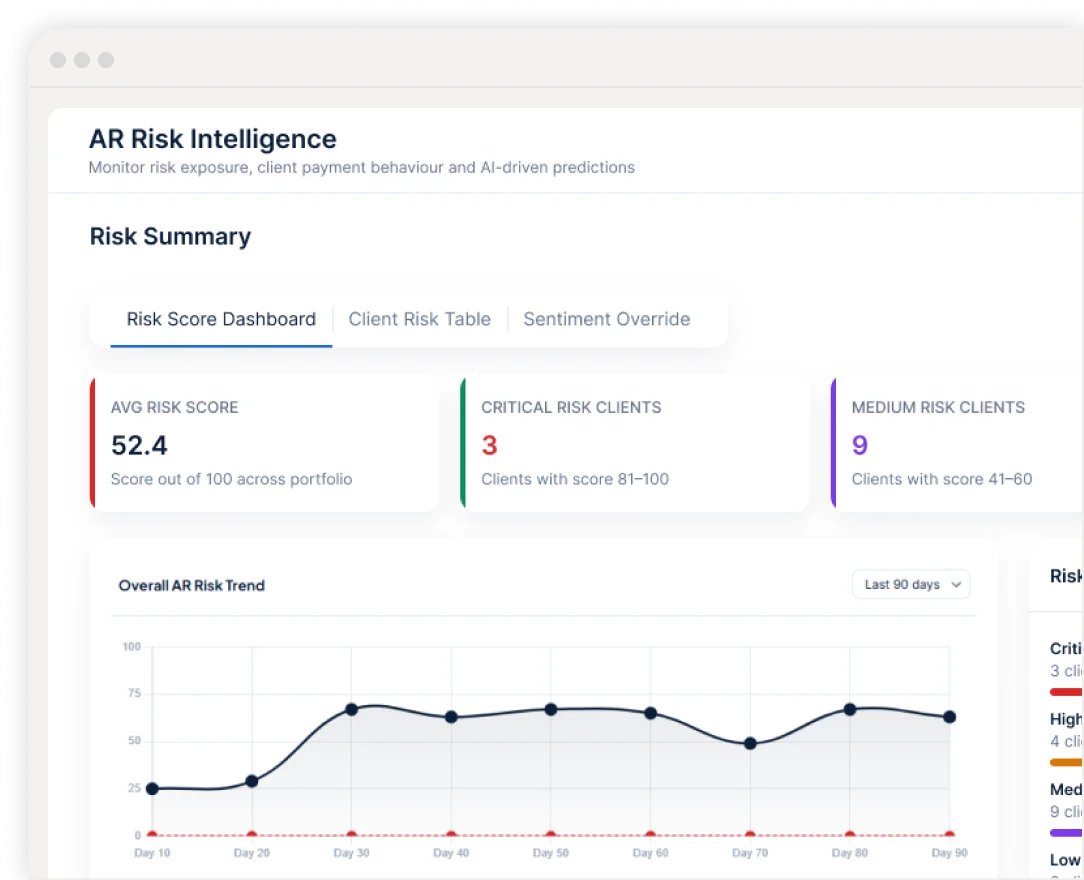
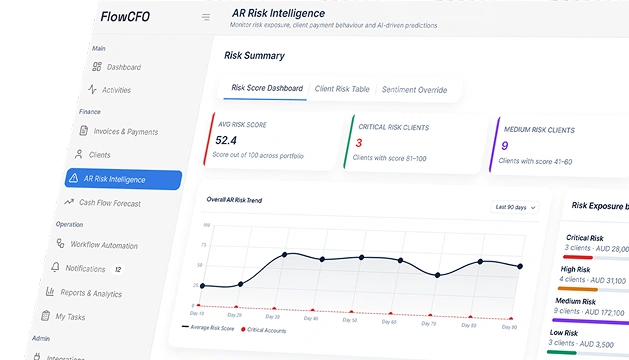
Monitor Financial Exposure Before It Impacts Recovery Rates
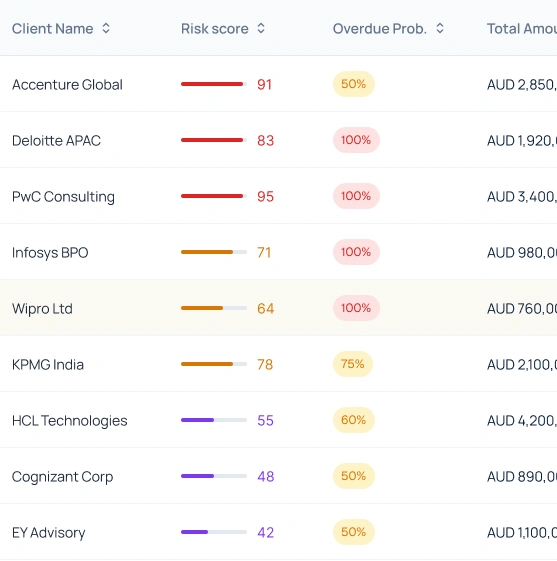
Leverage predictive risk intelligence to assess customer exposure, payment reliability, and collection probability across the receivables portfolio. With FlowCFO, finance teams can identify emerging risk indicators earlier, allocate collection resources strategically, and protect liquidity from avoidable payment disruptions.
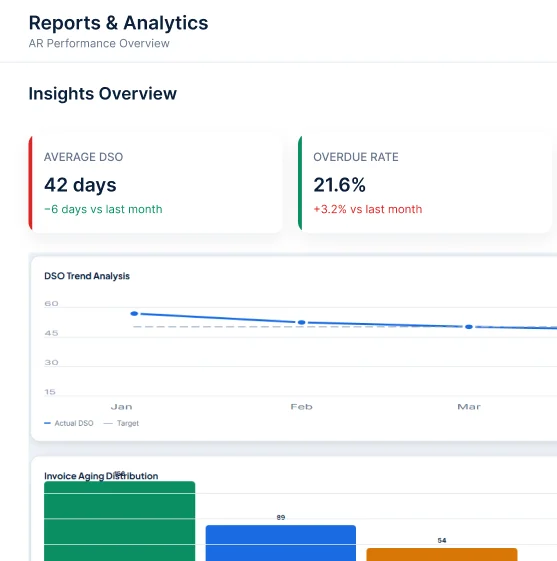
Measure Receivables Performance from Every Angle
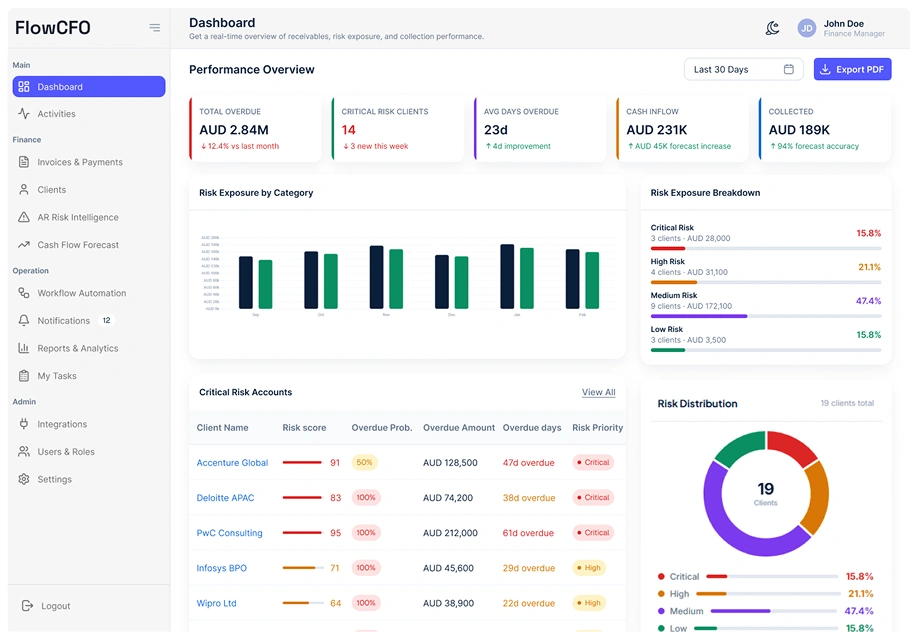
Track DSO trends, collection efficiency, aging distribution, portfolio exposure, and recovery outcomes through a unified analytics layer. Performance insights help finance leaders identify collection bottlenecks, evaluate portfolio health, and improve receivables strategy with greater precision.
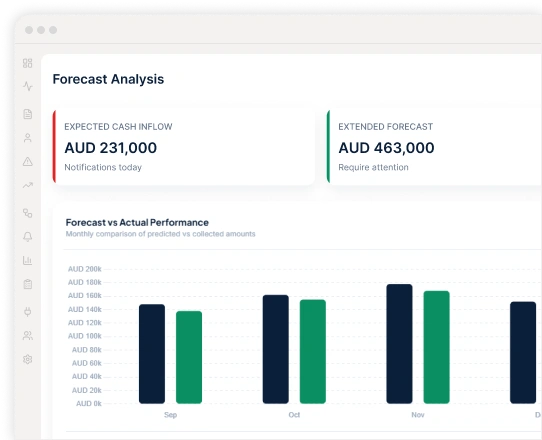
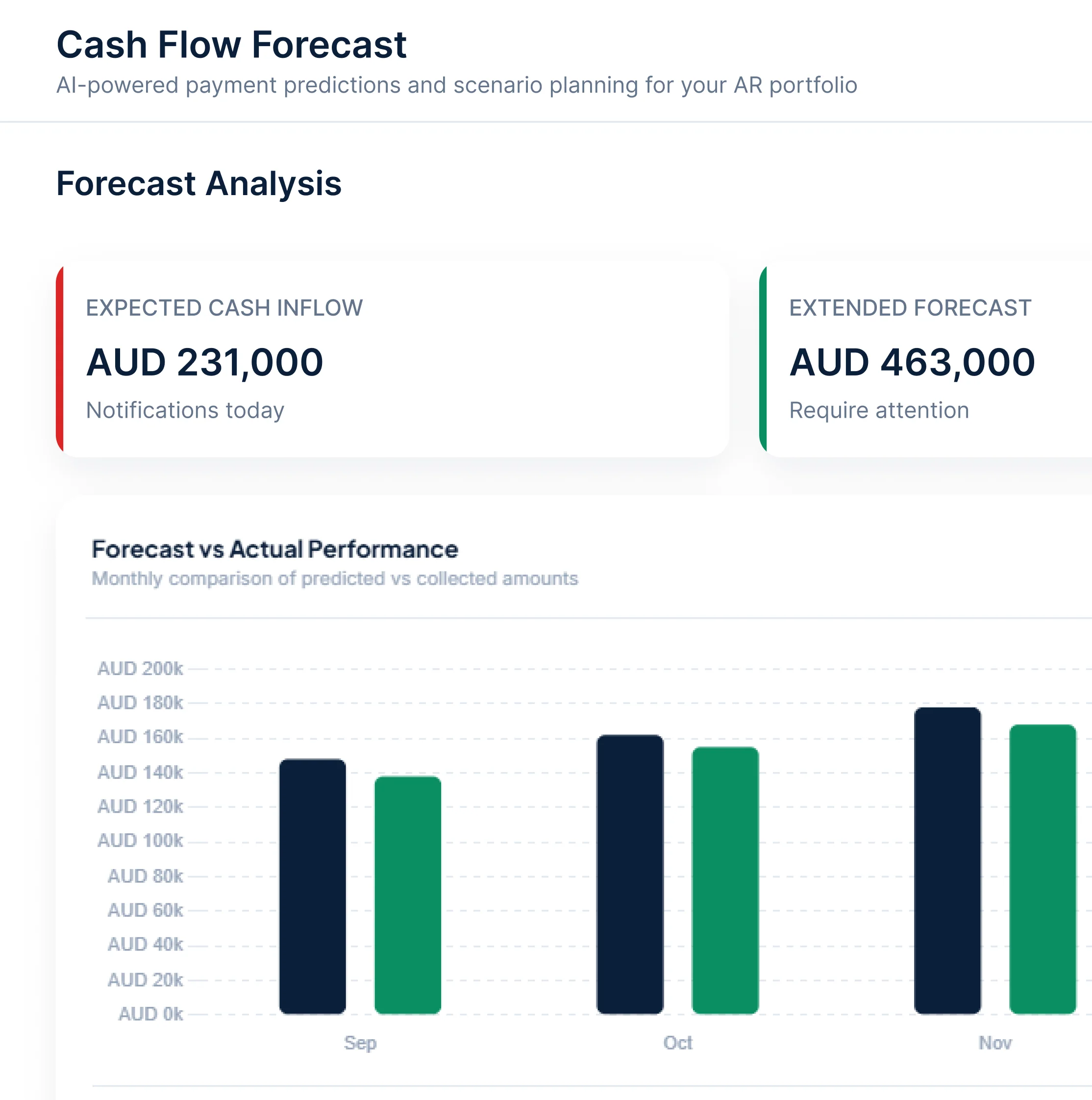
Model Future Liquidity with Predictive Intelligence
Combine payment behavior, portfolio risk, and receivables performance data to project future cash positions. Scenario-based forecasting, variance analysis, and AI-driven predictions support stronger planning accuracy and more confident liquidity management decisions.
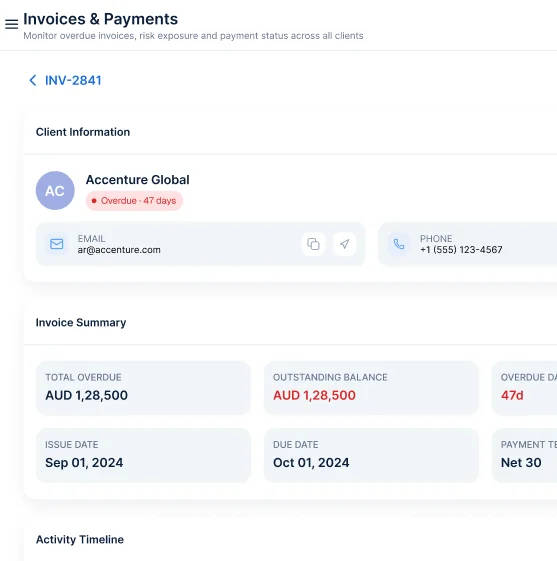
Drive Recovery Actions with Complete Account Context
Access to invoice status, payment history, escalation activity, risk indicators, and collection records within a single workspace. Account-level visibility supports faster resolution cycles, stronger recovery execution, and improved control across outstanding receivables.
AR Risk Intelligence
Monitor Financial Exposure Before It Impacts Recovery Rates
Leverage predictive risk intelligence to assess customer exposure, payment reliability, and collection probability across the receivables portfolio. With FlowCFO, finance teams can identify emerging risk indicators earlier, allocate collection resources strategically, and protect liquidity from avoidable payment disruptions.
Reports & Analytics
Measure Receivables Performance from Every Angle
Track DSO trends, collection efficiency, aging distribution, portfolio exposure, and recovery outcomes through a unified analytics layer. Performance insights help finance leaders identify collection bottlenecks, evaluate portfolio health, and improve receivables strategy with greater precision.
Cash Flow Forecast
Model Future Liquidity with Predictive Intelligence
Combine payment behavior, portfolio risk, and receivables performance data to project future cash positions. Scenario-based forecasting, variance analysis, and AI-driven predictions support stronger planning accuracy and more confident liquidity management decisions.
Invoices & Payments
Drive Recovery Actions with Complete Account Context
Access to invoice status, payment history, escalation activity, risk indicators, and collection records within a single workspace. Account-level visibility supports faster resolution cycles, stronger recovery execution, and improved control across outstanding receivables.
Move Beyond Traditional Receivables Management
Replace fragmented processes with connected intelligence, automated execution, and complete financial visibility.
Common Questions About FlowCFO
Understand how FlowCFO helps streamline collections, strengthen liquidity management, and improve operational efficiency.
FlowCFO combines AI-driven account prioritization, automated collection workflows, payment reminders, and escalation rules to accelerate invoice recovery. By identifying high-priority accounts and reducing manual follow-up efforts, finance teams can shorten collection cycles and improve cash conversion performance.
Risk assessments are generated using payment behavior, overdue patterns, outstanding exposure, receivables aging, and collection performance. FlowCFO continuously evaluates these indicators to identify customers that may require earlier intervention.
Forecasts are built using unpaid invoices, due dates, historical payment behavior, collection performance, customer interactions, and AI-generated risk assessments. Multiple forecasting scenarios help finance teams evaluate potential liquidity outcomes.
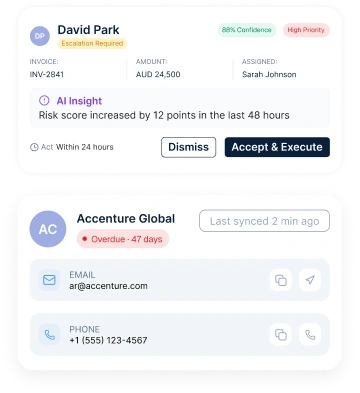
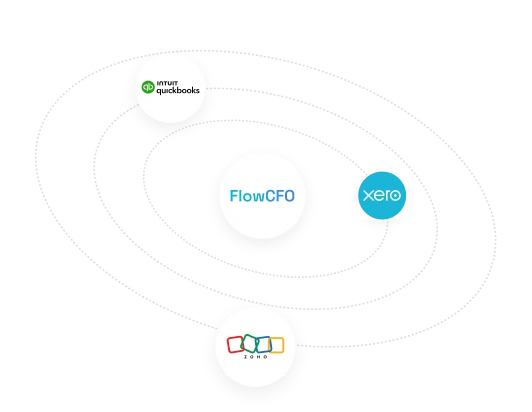
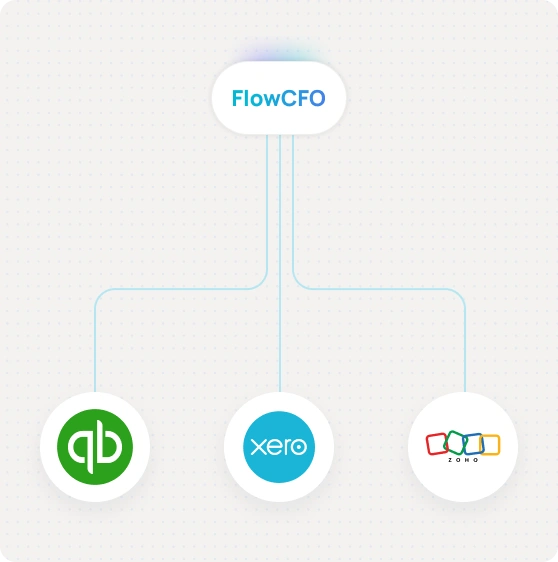
FlowCFO connects with accounting and business systems to synchronize invoices, payments, customer records, and operational data. Current integrations include platforms such as Xero, Zoho Books, and QuickBooks, with support for additional systems through integrations.
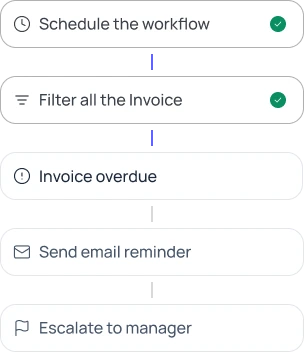
Finance teams can configure workflows for payment reminders, overdue invoice management, risk-based escalations, customer monitoring, approvals, and collection activities. AI-driven workflows automatically trigger actions based on predefined conditions and account behavior.
Make Cash Flow More Predictable.
Organizations across industries rely on FlowCFO to streamline collections, improve forecasting accuracy, and support working capital objectives.

"Our collections process relied heavily on spreadsheets, manual follow-ups, and fragmented reporting. FlowCFO brought everything into a single platform, helping our team prioritize the right accounts, automate repetitive tasks, and improve visibility across the receivables portfolio."
"Cash flow forecasting was previously based on assumptions and static reports. With FlowCFO, we gained greater confidence in our projections and a clearer understanding of customer payment behavior. The platform has become an important part of our financial planning process."
"FlowCFO gave us a structured way to manage customer risk and collection activities across multiple business units. The automation capabilities reduced administrative effort while helping our team focus on higher-value financial decisions."